E-mail:Summer@fsorgin.com Telephone: +86 151-1302-4743
- All
- Product Name
- Product Keyword
- Product Model
- Product Summary
- Product Description
- Multi Field Search
English


MVC-005
| Quantity: | |
|---|---|


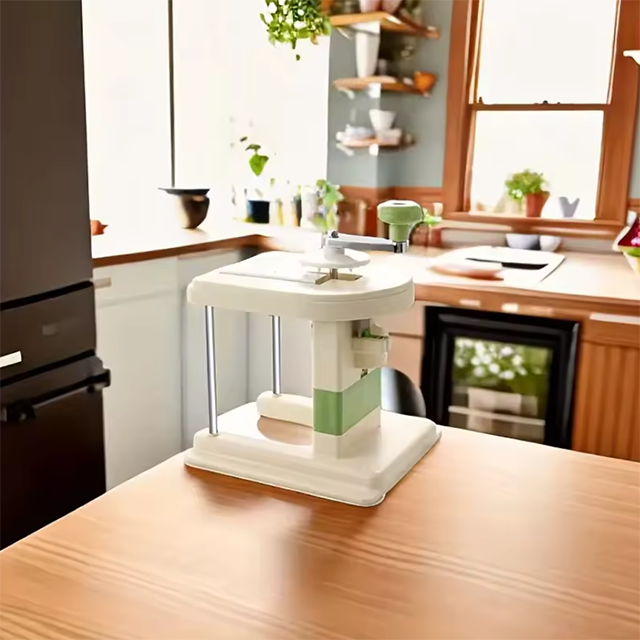
MVC-005 cabbage cutter is a kitchen tool specifically designed for slicing, shredding, or chopping cabbage. It typically consists of a sharp blade or blades attached to a frame or container that securely holds the cabbage in place while cutting. Cabbage cutters come in various designs, including manual hand-held models, electric versions, and larger commercial-grade machines. They are used to quickly and efficiently prepare cabbage for salads, coleslaw, stir-fries, soups, and other dishes that require finely shredded or sliced cabbage.
Reduced Risk of Injury: Using a cabbage cutter can be safer than using a knife, especially for those who are less experienced in the kitchen. Many models come with safety features like hand guards to protect your fingers.
Ergonomic Design: Some cabbage cutters are designed to be ergonomic, reducing strain on your hands and wrists during prolonged use.
Easy to Use: Most cabbage cutters are straightforward to use, requiring minimal setup and effort.
Compact Storage: They are often compact and easy to store, taking up minimal space in your kitchen.
Restaurant-Quality Dishes: The precision and consistency of a cabbage cutter can help you achieve restaurant-quality results at home.
Impress Guests: Uniformly sliced vegetables can make your dishes look more appealing and professional, impressing family and guests.
Cost-Effective: While there is an initial cost, a cabbage cutter can save you money in the long run by reducing the need to buy pre-cut vegetables, which are often more expensive.
Long-Lasting Tool: High-quality cabbage cutters can last for many years with proper care, making them a worthwhile investment.
| Product Name | Cabbage Cutter |
| Model No | MVC-005 |
| Material | ABS+PP+stainless steel |
| Color | multi color |
| Product weight | 975g |
| Product size | 23*18*22cm |
| Features | Multi-Functional, Easy To Use And Storage, Safe Material |
| Color box size | 25*23*23cm |
| Loading qty/40HQ | 380 |
Home Kitchens
Everyday Cooking: Ideal for everyday use to prepare salads, coleslaws, stir-fries, and other dishes that require thinly sliced vegetables.
Meal Prepping: Great for meal prepping, allowing you to quickly slice large quantities of vegetables for future meals.
Healthy Eating: Encourages the use of fresh, whole vegetables, which are generally healthier than pre-cut or processed options.
Apartment Kitchens
Limited Space: The compact size of a cabbage cutter makes it suitable for small apartments with limited kitchen space.
Efficient Cooking: Ideal for students, young professionals, and singles who need to cook quickly and efficiently.
Tiny Homes and RVs
Portable Cooking: The portability and efficiency of a cabbage cutter make it a great choice for tiny homes and recreational vehicles.
Off-Grid Living: Useful for off-grid living where space and efficiency are crucial.
Camping and Outdoors
Backcountry Cooking: Portable cabbage cutters can be used for camping and outdoor adventures to prepare fresh, healthy meals.
Field Kitchens: Useful in field kitchens for scouts, hikers, and outdoor enthusiasts.
Restaurants
High-Volume Cooking: Ideal for restaurants that need to prepare large quantities of thinly sliced vegetables for salads, appetizers, and main dishes.
Consistent Results: Ensures consistent slicing, which is important for maintaining the quality and presentation of dishes.
Catering Services
Batch Cooking: Perfect for catering services that need to prepare large amounts of vegetables for events and gatherings.
Time-Saving: Saves time and labor, allowing caterers to focus on other aspects of their service.
Institutional Kitchens
Schools and Universities: Used in school and university cafeterias to prepare fresh, healthy meals for large numbers of students.
Hospitals and Healthcare Facilities: Ideal for preparing nutritious meals for patients and staff in healthcare settings.
Bakeries and Confectioneries
Specialty Dishes: Used to prepare thin slices of fruits and vegetables for garnishes, toppings, and decorative elements.
Consistent Quality: Ensures that the quality of the products remains consistent.
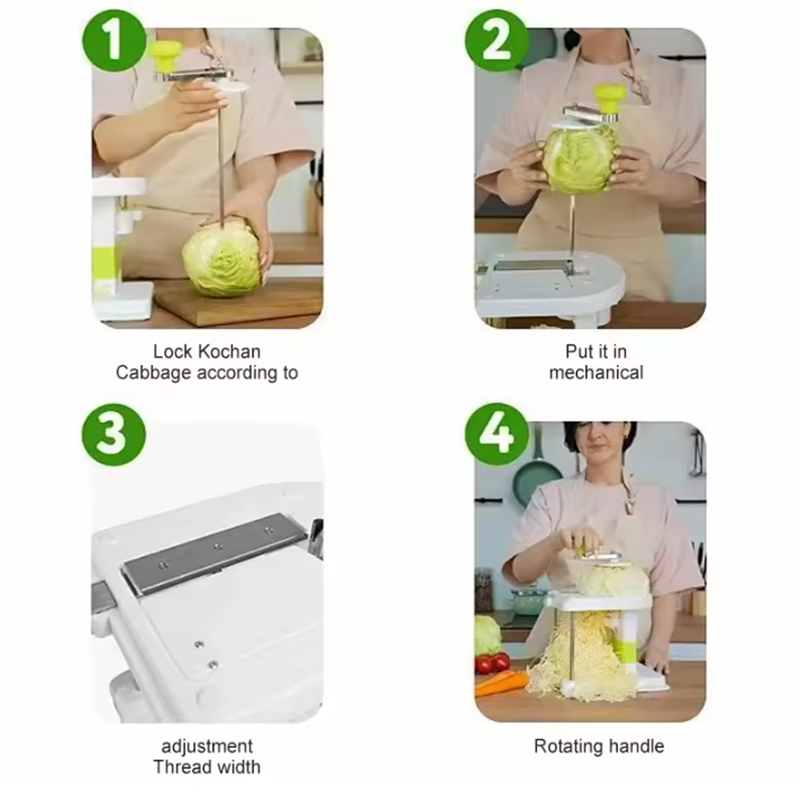
Wash Vegetables: Thoroughly wash the vegetables you plan to cut to remove any dirt or debris.
Trim and Prepare: Trim any ends or stems that need to be removed. For example, cut the core out of a cabbage or trim the ends of a carrot.
Cut Large Vegetables: If you are working with large vegetables like cabbages, it may be easier to cut them into manageable pieces before using the cutter.
Choose the Blade: Select the appropriate blade for the type of cut you want. Common blades include:
Slicing Blade: For thin, even slices.
Julienne Blade: For thin, matchstick-like strips.
Shredding Blade: For fine, shredded pieces.
Attach the Blade: Insert the chosen blade into the slot on the cabbage cutter and secure it according to the manufacturer's instructions.
Set the Thickness: Adjust the thickness setting if your cutter has this feature. This allows you to control how thin or thick your slices will be.
Safety First: Always use the hand guard or food holder that comes with the cabbage cutter. This protects your fingers from the sharp blade.
Position the Vegetable: Place the vegetable on the hand guard or food holder, ensuring it is stable and secure.
Position the Cutter: Place the cabbage cutter on a stable, flat surface. Ensure it is on a non-slip mat or a clean, dry countertop to prevent it from moving.
Slide the Vegetable: Hold the vegetable firmly with the hand guard and slide it down the blade. Use a smooth, steady motion to ensure even slices.
Continue Slicing: Continue sliding the vegetable down the blade until it is fully sliced. If the vegetable becomes too small to handle safely, stop and use a knife to finish the remaining pieces.
Disassemble the Cutter: Once you have finished slicing, disassemble the cabbage cutter according to the manufacturer's instructions.
Wash the Parts: Wash the blade, hand guard, and other parts with warm, soapy water. Some models may be dishwasher safe, but check the manual to be sure.
Dry Thoroughly: Dry all parts thoroughly before storing to prevent rust and ensure they are ready for the next use.