E-mail:Summer@fsorgin.com Telephone: +86 151-1302-4743
- All
- Product Name
- Product Keyword
- Product Model
- Product Summary
- Product Description
- Multi Field Search
English


GS-041
| Quantity: | |
|---|---|


Simultaneous Cooking: Multiple burners allow you to cook multiple dishes at the same time. This is particularly useful for preparing complex meals or cooking for large groups.
Different Cooking Methods: You can use different burners for various cooking methods, such as boiling, frying, simmering, and sautéing, all at once.
Parallel Tasks: With multiple burners, you can start different stages of a meal simultaneously. For example, you can boil water for pasta on one burner while sautéing vegetables on another.
Reduced Waiting Time: You don't have to wait for one dish to finish before starting another, which can save a significant amount of time, especially during busy mealtimes.
Variable Heat Settings: Each burner can be adjusted independently, allowing you to set different heat levels for different dishes. This is crucial for achieving the right temperature for each cooking task.
Immediate Response: Gas burners respond immediately to changes in the flame, giving you precise control over the cooking process.
Optimized Kitchen Space: Multiple burners maximize the use of your stovetop space, allowing you to organize your cooking area more efficiently.
Accommodate Different Cookware: Different burners can accommodate a variety of cookware sizes, from small saucepans to large stockpots.
| Product Name | Gas Stove |
| Model No | GS-041 |
| Panel material | 304 S.S |
| power(kw) | 3.3/1.75/1.75/1.0 |
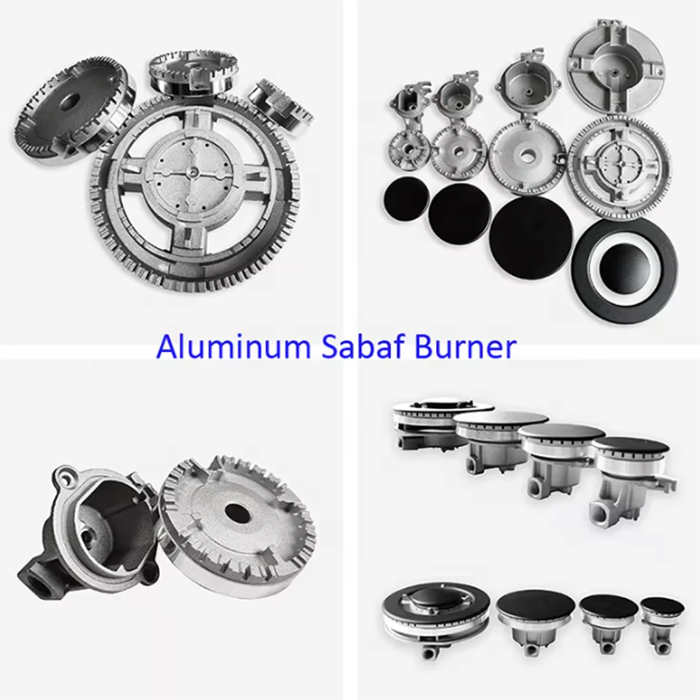
| Burner | original ltalian SABAF |
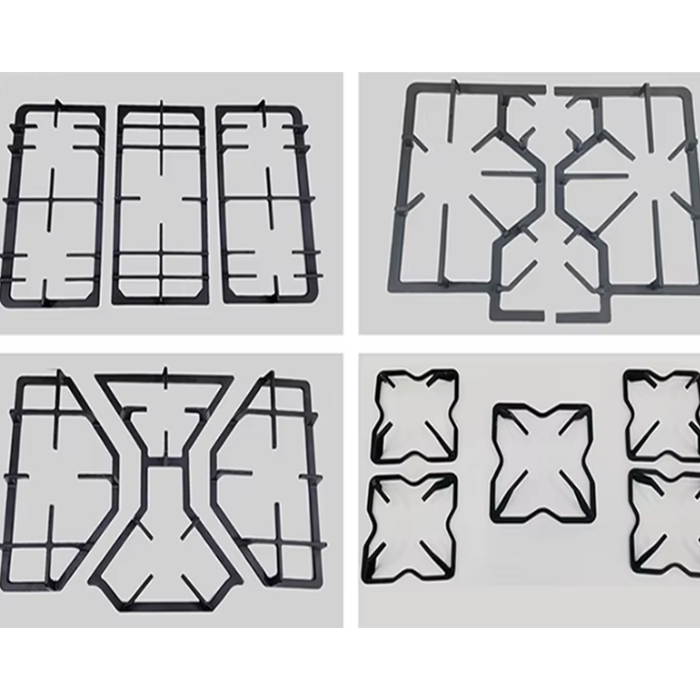
| Burner caps | Shiny/matt enamel Pan support:Heavy cast iron/slim copy/Enamel |
| Pan support | Heavy cast iron/slim copy/Enamel |
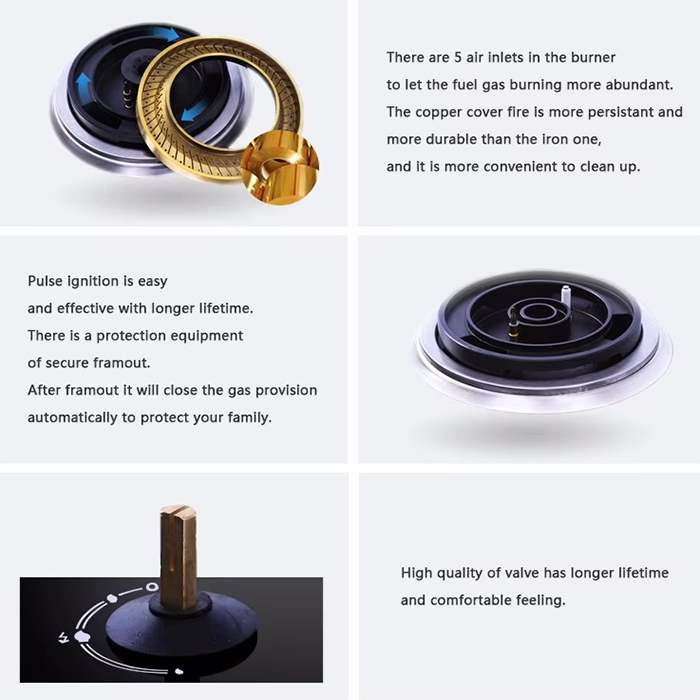
| Control knob | Bakelite/metal |
| Ignition | A.C(110-240V)/D.C1.5v Battery |
| Dimension(mm) | 580*500 |
| Packing | 1PCS/CTN |
| QTY/40HQ | 1350 |
Community Kitchens:
Cooking Classes: Used in community kitchens for teaching cooking classes and workshops.
Group Meals: Ideal for preparing meals for community events, such as potlucks and fundraisers.
Recreational Facilities:
Cooking Clubs: Used in recreational facilities for cooking clubs and hobby groups.
Event Cooking: Useful for preparing food for events and activities hosted at the facility.
Cooking Schools and Culinary Institutes:
Practical Training: Used for hands-on training in cooking techniques and recipes.
Classroom Demonstrations: Ideal for demonstrating cooking techniques to students.
Test Kitchens:
Recipe Development: Used for developing and testing new recipes.
Product Testing: Useful for testing the performance of new kitchen tools and appliances.
Match Cookware to Burner Size: Use pots and pans that fit the burners appropriately. Pans that are too small or too large can lead to inefficient cooking and wasted gas.
Choose Heavy-Bottomed Pans: These distribute heat more evenly and are less likely to warp or cause hot spots.
Spatulas and Utensils: Use heat-resistant utensils to avoid melting or damaging your cookware.
Thermometers: Use a kitchen thermometer to monitor the temperature of oils and foods, especially when deep-frying or baking.
Turn Off Burners When Not in Use: Turn off burners that are not currently being used to save gas and reduce the risk of accidents.
Use Residual Heat: Turn off the burner just before the cooking is complete and use the residual heat to finish the cooking process.
Reheat in the Oven: For reheating large quantities of food, consider using the oven instead of the stovetop to distribute heat more evenly.
Use Smaller Burners for Small Quantities: Reheat smaller portions using a smaller burner to save energy.
Organize Cookware: Store pots and pans in an accessible location to minimize movement and clutter around the stove.
Protect Burners: Cover the burners with a protective cover when not in use to prevent dust and debris from accumulating.